
Inside Reframe Systems: AI-Powered Microfactories That Build Homes
How Reframe Systems uses robotics and AI and to build net-zero, affordable homes

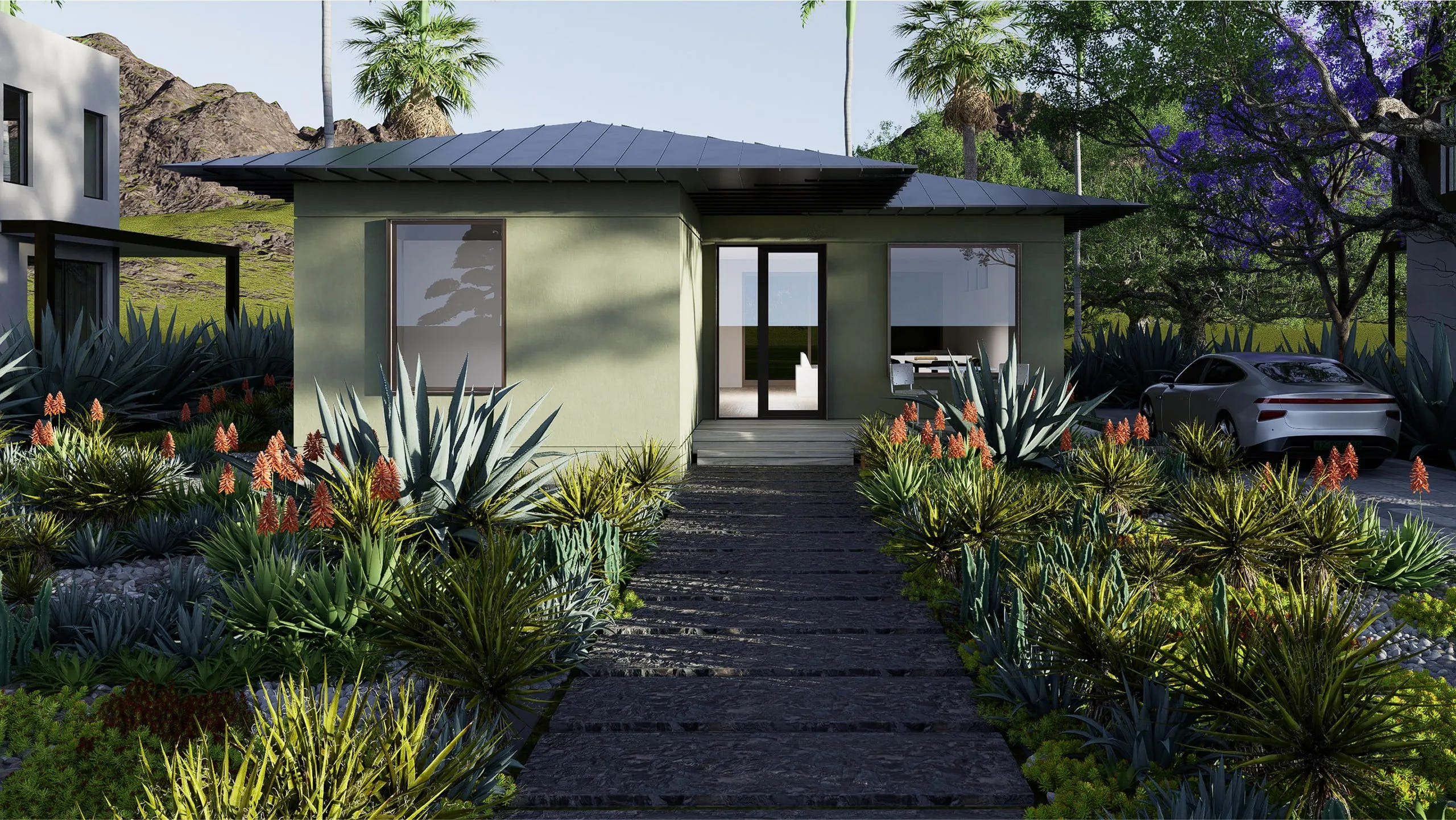
You wouldn’t build a car in your driveway, so why do we still build homes that way?
For decades, many have tried (and failed) to become the Henry Ford of housing, burning through billions of dollars along the way (see: Katerra, Veev). But with the rise of AI, robotics, and automation, the market once again feels poised for real change.
A few years ago, Brian Potter, the brilliant writer of Construction Physics, argued that construction industrialization might finally become possible if automation advanced enough to fundamentally change the game:
“The thing that would be most likely to solve [construction productivity] is just if automation gets really good… Automation has this sort of physical aspect of it and this informational processing aspect of it and we’re slowly getting better at the informational processing aspect of it. If you could have a really general purpose automation… like a humanoid robot that was basically as capable as manual labor and wasn’t outrageously expensive. Or something equivalent that would really change the game in construction, that would enable a lot of productivity improvements we haven’t really seen.”
Meet one of the latest companies working to change the game: Reframe Systems.
Reframe Systems combines AI and robotics to build net-zero affordable homes in their network of microfactories. Its founders — Vikas Enti, Aaron Small and Felipe Polido — met at Amazon Robotics and draw on their learnings there to build homes faster, cheaper, and more sustainably. I recently spoke with Aaron Small, Head of Manufacturing and Operations at Reframe, about how they’re rethinking construction from the ground up.
What’s wrong with the way we build today?
Practically everything. Home construction is wildly fragmented, inefficient, and outdated. While nearly every other industry has embraced industrialization—driving down costs and improving quality—homebuilding remains stuck in a one-off, custom-project mindset. Architects draw from scratch, engineers start fresh, builders interpret on the fly and subcontractors do things their own way. All while navigating a tangled web of regulations.
Each player acts to protect their own financial and legal interests, which creates misaligned incentives and bloats costs. There’s no shared mission, no system-wide optimization, and no feedback loops to drive efficiency.
As Aaron puts it,
“Imagine if Apple shipped all the parts of an iPhone to your house and sent a team to assemble it in your living room, adjusting the design on the fly. You’d end up with a $20,000 iPhone that doesn’t work very well… Unfortunately that’s how we build houses today.”
So, why hasn’t construction standardized like every other major industry?
Put simply, and perhaps unsurprisingly, building a home is far more complex than building a phone or a car.
Every building site comes with its own set of conditions and restrictions, from varying soil and climate to differing regulations. Zoning laws, building codes, design vernaculars and customer preferences vary from place to place, adding incredible complexity to the problem.
Citing his predecessors, Aaron notes:
“I think a lot of folks that have attempted to do this before have said, we must standardize and industrialize. We must build a system that is extremely constrained and simplified like the Model T. We're gonna just build any color as long as it's black. And that just does not work in housing.”
How is Reframe doing it differently?
Instead of trying to force homes into rigid, repeatable molds, Reframe is building a platform that can handle variation while still achieving scale. Their goal is to emulate the flexibility of general contractors—who can show up on a site with a set of plans and materials and build something custom—but do it within a factory setting.
Where most prefab efforts have focused on either tiny, highly standardized units (like ADUs) or large, repeatable projects (like hotels), Reframe is targeting the “missing middle”: the vast and varied landscape of single-family and small multi-family housing. That requires a more nuanced approach—one that allows for site-specific adaptation without redoing the entire process every time.
The core of their solution is a combination of a physical product platform and a software layer. The product platform defines a rulebook: wall panels stretch in certain ways, window details follow certain standards, finishes are drawn from a limited set. But the real innovation is in the software. By embedding architectural, engineering, and code expertise into digital tools, Reframe can rapidly determine whether a design is viable for a specific site, run structural analyses, and generate shop-ready manufacturing files—all with minimal human coordination.
This drastically reduces the time and complexity between concept and construction, compressing what typically takes months of back-and-forth between architects, engineers, and local regulators. It doesn’t eliminate constraints—but it makes navigating them faster, cheaper, and more scalable.
In doing so, Reframe is able to save 30% on schedule for most projects. Aaron mentions that:
“A typical construction process might take 18 months, and we can comfortably shave about six months off of that process. And, you know, a big cost of building is construction financing, which is how long are you actually carrying a construction loan and paying interest on that loan and sort of waiting to get a return on the money that you've invested into a project. And so doing things faster is doing things cheaper”
What does a Reframe home look like?
A Reframe home might surprise you by how normal it looks—because it doesn’t look modular at all. Unlike the outdated image many people have of factory-built housing—think mobile homes or overly standardized boxes—Reframe homes are built with the same materials and design range you'd expect from any traditionally built house.
Here’s an example of a duplex they offer: a 1,800 square foot home with 2 beds, 1.5 baths starting at $460k.
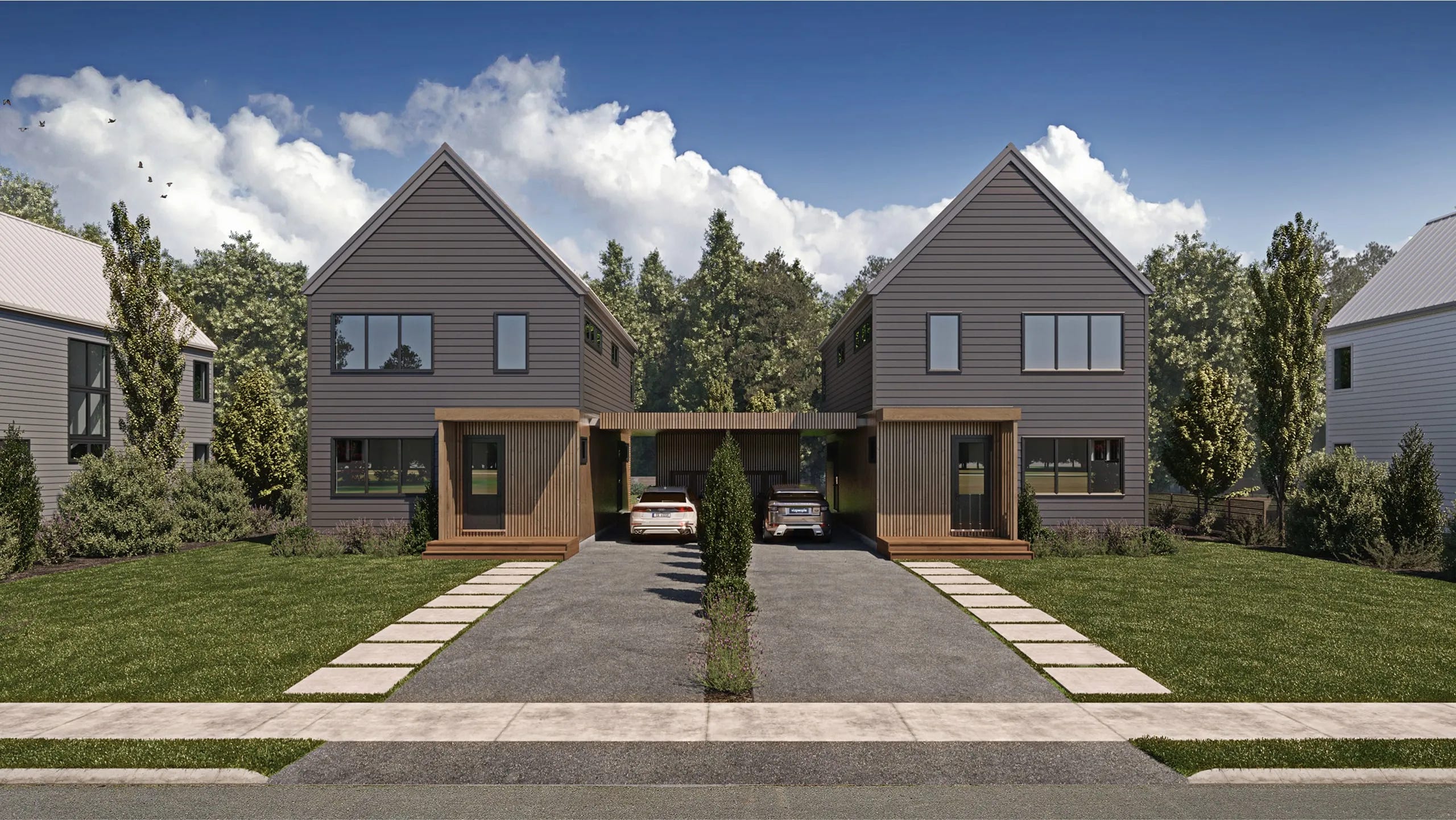
What sets them apart is performance: Reframe homes are all-electric, extremely well insulated, and airtight. They include advanced ventilation systems that filter and exchange air from outside—making for healthier indoor air, especially in areas affected by wildfires or pollution.
And because they're made in a controlled environment, the quality tends to be higher and more consistent. You might not notice what’s behind the walls—but just like you wouldn’t want your iPhone built in someone’s living room, the benefits of precision factory construction show up in durability, efficiency, and comfort.
Reframe is building for the future, not just the present
Aaron Small acknowledges the tension between affordability and sustainability — most sustainable materials and systems still carry a premium. But history shows that with time and adoption, costs come down. Heat pumps are a current example: once expensive, now increasingly affordable, efficient, and easy to install. Solar is on a similar path.
Reframe’s plan is to help accelerate that curve. They focus on integrating promising, lower-carbon materials early—even if they cost a bit more today—so they’re ready to scale when the market and policy catch up. One example: Reframe uses TimberBatt insulation instead of fiberglass. It’s made from sawdust, sequestered carbon, and is healthier for occupants—but currently costs more because only one U.S. manufacturer produces it.
Reframe accepts that tradeoff today to build for the future. As regulations evolve to mandate lower embodied carbon and higher energy performance, they aim to be ready—not playing catch-up.
Watch Aaron dive deeper into Reframe’s process here:
Also recommended:
Why Is It So Expensive to Build Stuff in America? Plan English with Derek Thompson