
Small Development, Big Impact
The power of incremental development: How community-first development is redefining Dobbs Ferry, NY

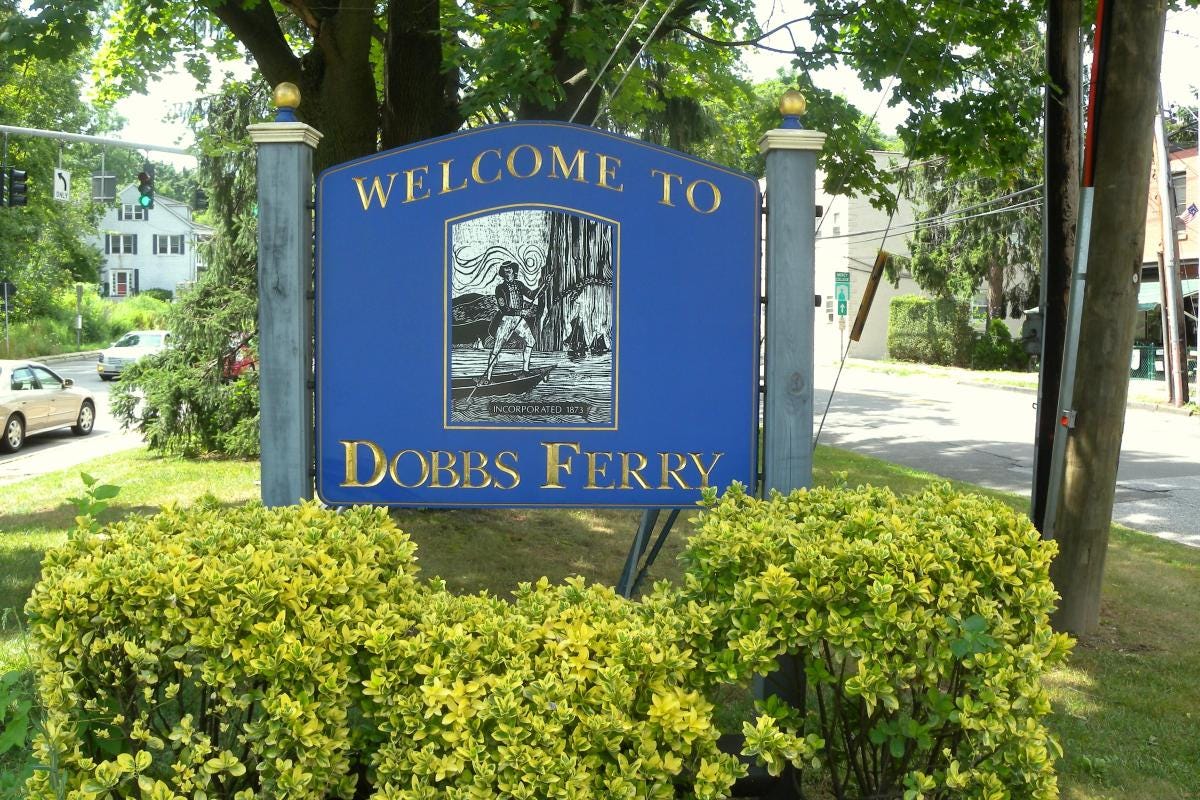
What good local development looks like
It’s well known among housing advocates that we need more investment in the missing middle1. For the past forty years, Paddy Steinschneider —placemaker, designer, and developer — has been doing just that. He’s dedicated his career to building thoughtful, community-centered housing in his hometown of Dobbs Ferry, a beautiful river town along the Metro-North rail line connecting New York City to the Westchester suburbs.
Year by year, brick by brick, Paddy has built hundreds of homes across New York, the broader Northeast, and Chicago. His projects range from ground-up townhomes and cottage courts to the adaptive reuse of aging mansions into affordable townhomes, significantly increasing Dobbs Ferry’s housing supply. I spent a day touring his projects, and it was inspiring to see what a vision and some persistence can do to improve a town.
Watch Paddy talk through his first project in Dobbs Ferry:
I was introduced to Paddy through the Incremental Development Alliance (IDA), an organization that empowers everyday people to invest in their communities through small-scale, incremental development. IDA’s core belief is that transformative change happens one project at a time, led by locals who deeply understand their neighborhoods. Paddy embodies this philosophy.
So what’s his secret to successful development? Persistence, an encyclopedic knowledge of zoning codes, strong relationships within the community, and —perhaps most importantly — a sense of humor.
Paddy didn’t just learn the local zoning code— he wrote it. After 9/11, Dobbs Ferry’s mayor tasked him and a few others with revitalizing the town. As part of the project, they secured a New York State Waterfront grant and made the case for updating zoning regulations to unlock critical funding. Paddy and a small group formed the town’s Land Use Committee and rewrote the local code, addressing everything from lot requirements to parking minimums.
Watch Paddy talk through how he revitalized Dobbs Ferry:
Paddy’s deep community ties have been equally crucial to his success. He coached his son’s soccer team, forging relationships with parents who would later become allies—or potential opponents—in town planning discussions. When someone pushed back against his projects, he often had the rapport to engage them in constructive dialogue. I saw this firsthand. As we wrapped up our meeting, Paddy dropped me off at the local train station and nudged me toward a man waiting at the platform. When I asked the man if he knew Paddy, he grinned and said, “Everybody knows Paddy. I interned with him in high school!”
How Even Widely Supported Projects Get Blocked
But even with deep community ties and careful planning, Paddy has faced relentless opposition. One project, a long-awaited theater revitalization in downtown Dobbs Ferry, took him 40 years to win over.
In the 1980s, he worked with a local acting group to restore a deteriorating theater. The project took a full year to plan, with parking requirements proving to be the most contentious issue. Paddy meticulously addressed concerns, securing rental agreements for two parking lots and even establishing a shuttle bus service to ferry patrons to the theater. The project had broad support and was slated for final approval—until, without warning, it was rejected due to “inadequate parking within 200 feet.” No further explanation was given.
It wasn’t until thirty years later that Paddy learned the truth: a local restaurant owner, fearing that the theater would compete for parking near his business, had wielded his influence in the town. The restaurant owner also happened to be a big local lender and the town’s mayor had taken out a large loan from him. The restaurant owner called an emergency planning meeting on a weekend—deliberately excluding Paddy—and spread a fabricated story that the project was actually a front for a discotheque, run by the mob, where drugs would be sold. The project was blocked by the local planning board, providing a false reason to Paddy.
This was not an isolated incident. At one point, a local Facebook group called “SOS Dobbs Ferry” was created by the local community to rally opposition against him. He was sometimes barred from attending meetings where his own projects were being debated. In some cases, hearings for his projects were deliberately scheduled for 11 PM, exhausting any chance of meaningful discourse.
The Power of Incremental Development
Paddy’s story is a testament to the power of incremental development and the challenges that come with it. His work proves that thoughtful, community-driven housing solutions are possible, but they require persistence, patience, and an ability to navigate the unpredictable world of local politics.
If we want more housing that strengthens communities rather than displaces them, we need more developers like Paddy—people who invest for the long haul, engage with their neighbors, and fight for good projects, even when the odds are stacked against them.
For those new to the term, missing middle housing refers to housing that provides diverse options along the spectrum of affordability. Typical missing middle housing includes multi-unit structures such as. townhomes, duplexes, triplexes and fourplexes.